
How do you begin your mornings?
Have you ever actually examined which apps you open first thing in the morning?
Not in theory, not in a “yeah yeah, I know” kind of way.I mean really looked at them.
Especially on a Monday morning, when the week hasn’t even started yet and your brain is still negotiating with reality.
Because if you pause long enough, something uncomfortable shows up. You don’t choose those apps. They choose you.
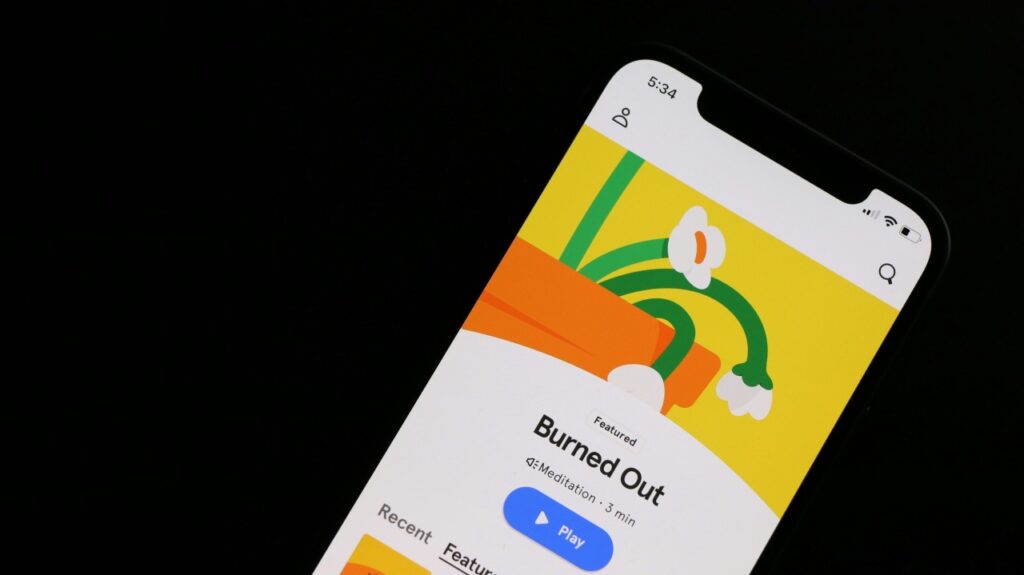
My mornings follow a familiar ritual. Alarm. A half-awake reach for the phone. And before I’m fully conscious, I’ve already stepped into multiple worlds.
Messages pull me into other people’s urgency. Email hands me a to-do list I didn’t write. Calendar reminds me that my day already belongs to someone else. News injects a sense of global anxiety, just in case I was feeling calm. And then, almost accidentally, something social sneaks in. Not because I planned it. Because it’s there.
By the time I put the phone down, nothing meaningful has happened. But my attention is already fragmented.
That’s when I started asking a different question. What if this isn’t about discipline or willpower at all? What if it’s about design?
Are all your Apps making you a Humpty Dumpty?
Individually, these apps are well made. Smart teams. Clean interfaces. Clear value propositions. The problem only appears when they coexist.
Each app assumes it deserves to be first, treating your morning as a scarce resource to capture. None of them ask what state you’re in, or what kind of day you’re trying to have.
They don’t even attempt to coordinate. They are designed to compete, making your mind a battlefield.
So before breakfast, you’re already context-switching between roles. Responder. Planner. Consumer. Observer. Reactor. It’s not that you’re doing too much. It’s that too many systems are doing things to you at the same time.
The App Store Is Designed to Fragment Your Mind
There’s a line by Herbert Simon that I keep coming back to:
“A wealth of information creates a poverty of attention.”
Most modern software quietly ignores this – product managers, do you realize the sin you are committing 😉 … products are optimized locally. Engagement, open rates, time spent. Each team does its job well. But your life isn’t a local system; it’s a global one.
When locally optimized products collide inside a human day, the result isn’t productivity. It’s cognitive noise.
And mornings are the worst possible place for that collision.
If you described this setup outside of software, it would sound absurd
Imagine seven coworkers showing up at your door before 7 a.m., each insisting they’re the most important conversation to have first. One wants decisions. One wants reassurance. One just wants you to “quickly look at something.”
You wouldn’t blame yourself for feeling scattered. You’d say the system is broken. But when apps do this, we internalize the failure.This is where systems thinking changes the tone of the conversation.
Inviting System Thinkers to take-up this challenge
The issue isn’t that any single app is badly designed. It’s that no one designed the morning.
No one took responsibility for sequencing, for transitions, for protecting low-energy cognitive states. The result is a default experience that trains reactivity before intention.
As Cal Newport has pointed out in his work on attention and deep focus, most of what exhausts us isn’t effort. It’s fragmentation. The constant switching between shallow demands that never quite resolve.
Mornings quietly set that pattern. What’s interesting is that we already know how to build calmer systems. We’ve seen products that are fast, opinionated, and restrained. Tools that remove choices instead of adding them. Tools that assume fewer configurations and offer stronger defaults.
They work because they carry a point of view about how work should feel.
Most morning apps don’t. They outsource that responsibility to you.
So you wake up, and before you’ve had a single uninterrupted thought, you’re acting as the integration layer for seven competing systems.
No wonder Monday mornings feel heavier than they should.
How can tech help our Monday mornings be fun?
Let’s move towards framing the challenge. If someone designed your morning the way software designs most dashboards or trackers, would you call it usable?
And if the answer is no, then the real opportunity isn’t another productivity hack. It’s rethinking how systems should behave when humans are at their most vulnerable.
If you’re the kind of person who notices these small, everyday frictions and can’t stop thinking about how they might be redesigned, that’s not nitpicking. That’s architectural instinct.
If you want to explore ideas like this, or turn daily annoyances into thoughtful experiments or products, write to help@founderhelpdesk.in.
Tell us which apps greet you every morning. And more importantly, how they make you feel before the day even begins.
Sometimes the most futuristic design problems are hiding inside the most ordinary routines.
– Fat Tony, FounderHelpDesk
Originally published at
https://www.linkedin.com/pulse/issue-14-7-apps-i-open-every-morning-what-say-bad-design-gpv2c