
We live in an age where connection is effortless. A click, a follow, a join request, a DM.The modern founder can be surrounded by people and yet backed by none of them. Connection has become a proxy for belonging.A cheap signal that mimics the shape of commitment but not its weight. But connection is not commitment.Connection is proximity.Commitment is consequence. One is easy to gather.The other must be earned. Every founder learns this the hard way. You can have thousands of followers and still be alone when the hard decisions arrive.You can have a community cheering for you and not one person who will hold the line with you. Digital closeness is not the same as shared responsibility.We mistake visibility for support.We confuse interaction for investment.We treat warm signals as if they were real alliances. Connection is easily available. Commitment is extremely….let us repeat that … extremely….rare. Commitment shows up differently. It is the advisor who challenges your assumptions, not the one who compliments your narrative.It is the peer who tells you the truth you didn’t want to hear.It is the person who remembers what you said you were building—and asks why it still isn’t done. Commitment requires cost.Time, attention, honesty, patience.A willingness to stand next to someone even when momentum falters and the story loses its shine. Connection requires nothing.And that is exactly what it delivers. The ecosystem has tried to scale belonging.Slack groups, WhatsApp circles, events, communities, networks.But scale creates distance, not depth.Noise, not clarity.Contact, not consequence. This is why most communities collapse into performance:People showing up, but not showing up for each other.An audience masquerading as a tribe. A founder does not need more connections.A founder needs a smaller number of people whose commitment is real. So here is the sixth heresy Your strength is not measured by the size of your network.It is measured by the number of people who would notice if you disappeared from it. Connection adds faces.Commitment adds foundation. Connection is the crowd.Commitment is the circle. And circles, not crowds, build companies that survive. FounderHelpDesk was not created to gather more connections.It was created to cultivate commitment—the rare, quiet, durable kind that changes the trajectory of a builder’s life. Because connection is effortless.Commitment is transformative.And only one of them will carry you through the hard parts of building. 🜏 The Antichrist of Ambition FounderHelpDesk Heretic Series Not against connection — against confusing it for belonging. Originally published at https://www.linkedin.com/pulse/fifth-heresy-community-clarity-founderhelpdesk-dtbuc
The Fifth Heresy: Connection Is Not Commitment
We live in an age where connection is effortless. A click, a follow, a join request, a DM.The modern founder can be surrounded by people and yet backed by none of them. Connection has become a proxy for belonging.A cheap signal that mimics the shape of commitment but not its weight. But connection is not commitment.Connection is proximity.Commitment is consequence. One is easy to gather.The other must be earned. Every founder learns this the hard way. You can have thousands of followers and still be alone when the hard decisions arrive.You can have a community cheering for you and not one person who will hold the line with you. Digital closeness is not the same as shared responsibility.We mistake visibility for support.We confuse interaction for investment.We treat warm signals as if they were real alliances. Connection is easily available. Commitment is extremely….let us repeat that … extremely….rare. Commitment shows up differently. It is the advisor who challenges your assumptions, not the one who compliments your narrative.It is the peer who tells you the truth you didn’t want to hear.It is the person who remembers what you said you were building—and asks why it still isn’t done. Commitment requires cost.Time, attention, honesty, patience.A willingness to stand next to someone even when momentum falters and the story loses its shine. Connection requires nothing.And that is exactly what it delivers. The ecosystem has tried to scale belonging.Slack groups, WhatsApp circles, events, communities, networks.But scale creates distance, not depth.Noise, not clarity.Contact, not consequence. This is why most communities collapse into performance:People showing up, but not showing up for each other.An audience masquerading as a tribe. A founder does not need more connections.A founder needs a smaller number of people whose commitment is real. So here is the sixth heresy Your strength is not measured by the size of your network.It is measured by the number of people who would notice if you disappeared from it. Connection adds faces.Commitment adds foundation. Connection is the crowd.Commitment is the circle. And circles, not crowds, build companies that survive. FounderHelpDesk was not created to gather more connections.It was created to cultivate commitment—the rare, quiet, durable kind that changes the trajectory of a builder’s life. Because connection is effortless.Commitment is transformative.And only one of them will carry you through the hard parts of building. 🜏 The Antichrist of Ambition FounderHelpDesk Heretic Series Not against connection — against confusing it for belonging. Originally published at https://www.linkedin.com/pulse/fifth-heresy-community-clarity-founderhelpdesk-dtbuc

AI PM Masterclass #10 – The Cognitive Load Dashboard
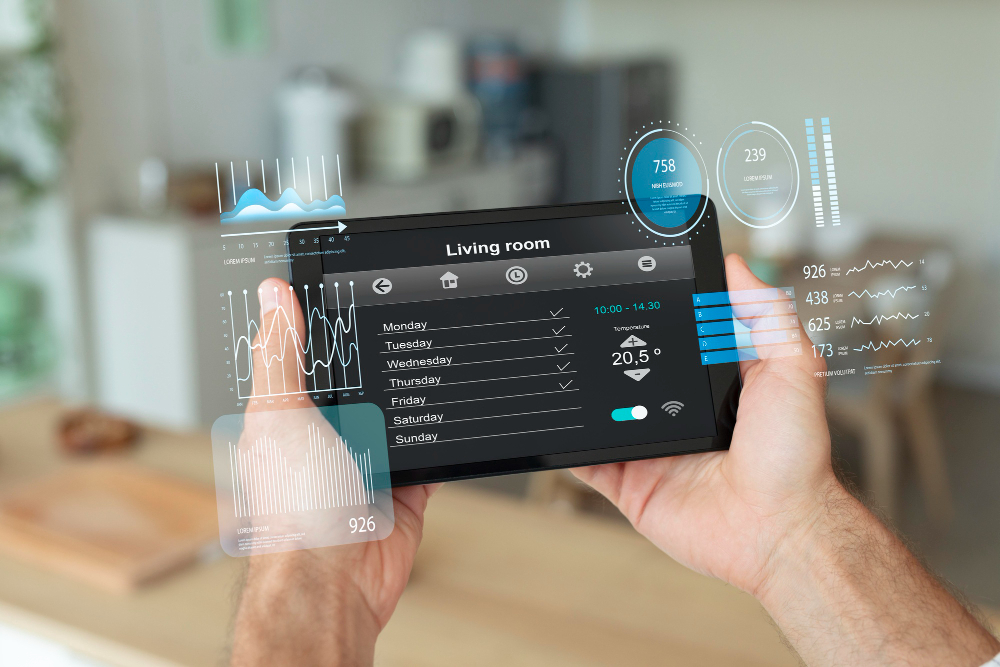
The Rabbit Hole Problem Let me start with something mildly uncomfortable. Thanks to GenAI, I am constantly deep-diving into multiple parallel research threads. I begin with one strategic question and within minutes I am exploring adjacent markets, sketching speculative MVPs, testing counterarguments, and mapping second-order effects. The friction to explore is almost zero, and the experience feels exhilarating. I am rarely stuck, rarely blocked, and almost always productive. And yet, somewhere inside that acceleration, something subtler happens. Decisions begin to feel heavier. I revisit the same documents not because they are unclear, but because my thinking has shifted. Strategic calls that once felt crisp start to feel diffuse. Nothing is obviously broken, but clarity seems to thin out quietly. Which led me to a simple question: if founders and CXOs track revenue, burn, pipeline velocity, hiring metrics, and feature adoption obsessively, why do we operate blind to the condition of our own cognitive load? From that question emerged an idea that felt playful at first and then increasingly serious: what if leaders had a Cognitive Load Dashboard? Why This Isn’t Absurd We already measure sleep, heart rate variability, screen time, productivity metrics, and team performance. Entire dashboards exist to monitor the health of our systems. Yet the people making high-stakes decisions — allocating capital, hiring executives, setting strategy — operate without visibility into the state of their own judgment bandwidth. The assumption is that we will “feel it” when overload happens. The problem is that cognitive saturation degrades the very faculty required to notice it. What Would a Cognitive Load Dashboard Actually Measure? Not intelligence, emotion, or performance. It would track signals of cognitive strain and fragmentation. Context switching frequency Meeting density versus deep work windows Decision velocity versus reversal rate Slack and email responsiveness patterns Revision loops in strategic documents After-hours cognitive spillover Number of high-stakes decisions made per day None of this requires AGI. It requires instrumentation and pattern detection. The goal is not precision. The goal is visibility. What Would the Dashboard Show? It would not scream red alerts. It would surface patterns such as: Rising fragmentation index Declining depth-to-reactive ratio Increasing decision reversals Shrinking context recovery time And occasionally it might ask a simple question: “Are you sure you want to finalize this decision today?” Not as a warning. As a pause. Why This Becomes More Relevant in an AGI-Proximate World As AI systems become more capable, leaders will process more inputs, explore more options, and manage more parallel initiatives. Optionality increases. Acceleration compounds. Decision surfaces expand. When intelligence becomes abundant, clarity becomes scarce. The bottleneck shifts from analysis to sustained coherence. Without instrumentation, cognitive degradation remains invisible until it manifests in misaligned strategy, reactive culture, or avoidable reversals. Possible MVP Paths This does not need to begin as a grand product. It could start as: A Chrome extension tracking context switching patterns A Slack integration summarizing interruption density A calendar overlay mapping deep work versus meeting compression A weekly “Cognitive Health Brief” email summarizing decision patterns For example: “This week you made 17 high-stakes decisions.Five were revisited within 48 hours.Sixty-one percent of your working time was spent in reactive channels.” A cogniton overload alert. Where This Gets Powerful And Risky This becomes powerful when it changes behavior. Leaders begin protecting deep work windows. Decision timing shifts. Teams align high-stakes conversations with high-clarity periods. AI agents are paused when bandwidth thins. It becomes risky if it turns into a performance score. If it gamifies resilience. If it compares executives against each other. The integrity line is clear: this is a reflection tool, not a judgment tool. The Larger Shift If AGI-level reasoning becomes commonplace, leaders will not differentiate themselves by processing more information. They will differentiate themselves by preserving coherence under acceleration. We have financial dashboards. We have product dashboards. We have marketing dashboards. We do not yet have judgment dashboards. In a world of cognitive abundance, that absence will start to matter. A Builder’s Assignment If you were to explore this idea seriously for thirty days, consider: What signals of cognitive strain can be measured without invading privacy? How would you prevent this from becoming a hustle metric? What is the minimum viable nudge that preserves autonomy? Would this be more valuable for founders and CXOs individually before becoming organizational infrastructure? What data would you refuse to collect, even if technically possible? If the idea feels slightly uncomfortable, that is a good sign. If it feels quietly inevitable, that is even better. In an era racing toward AGI, founders and CXOs will not win by thinking faster. They will win by knowing when their thinking is degrading and adjusting before it costs them. If you want to explore whether Cognitive Load Dashboards are a feature experiment, a category thesis, or an early warning signal for the next wave of executive infrastructure, write to help@founderhelpdesk.in. Let’s design for clarity before we optimize for speed. Originally published at https://www.linkedin.com/pulse/ai-pm-masterclass-10-cognitive-load-dashboard-founderhelpdesk-e7koc