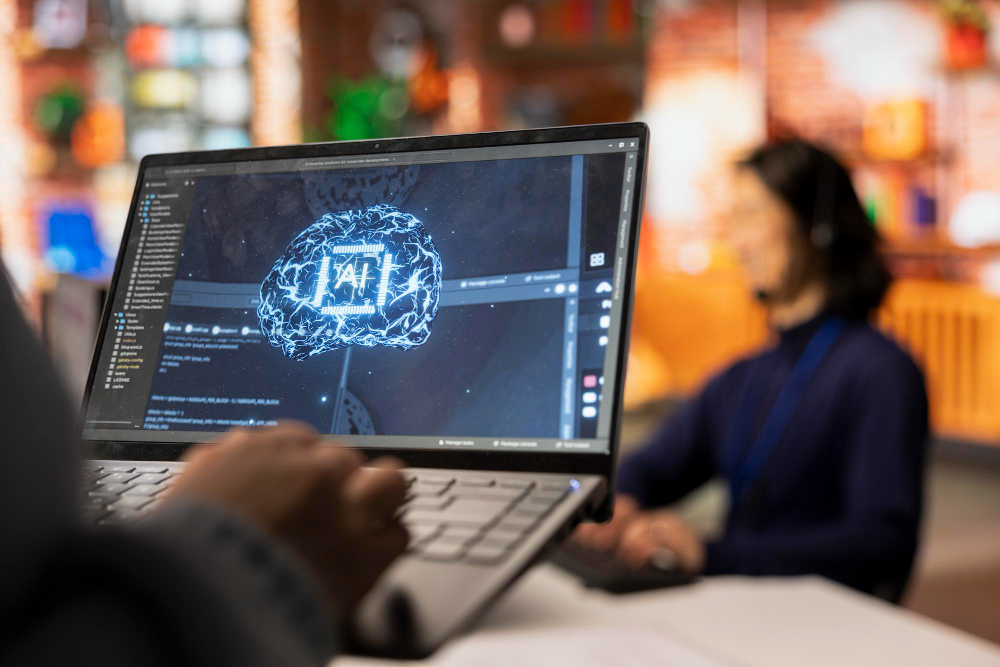
High on Productivity, Low on Deep Work? A few weeks ago, I sat down to do the kind of work that we rarely get uninterrupted time for anymore. No meetings, no calls, no context switching, just a long stretch to think through a hard decision that had been circling for weeks. I opened a doc, wrote a plan, and instinctively did what many of us now do without thinking: I asked an AI to help improve it. Forty five minutes later, I had five branches, fifteen alternative directions, seven reframings, and a set of much “better” plans. What I didn’t have anymore was continuity. The thread I had been following quietly dissolved, replaced by a set of impressive options that all pulled me somewhere else. Nothing went wrong. The AI did exactly what it was designed to do. And I was no longer doing deep work. That moment crystallized something I’ve since seen across founders, builders, and teams shipping GenAI products: AI doesn’t interrupt deep work the way Slack or email does. It assists you out of it. Deep work is no longer a personal discipline problem For years, we talked about deep work as a personal failing. If you couldn’t focus, you needed better habits, fewer notifications, or more discipline. That framing made sense when distractions were external and obvious. It breaks down in the AI era. Today, the most powerful interruptions are internal. They arrive disguised as help, insight, and acceleration. They don’t pull you away from the work; they pull the work apart while you’re inside it. This is why deep work has quietly become a systems design problem, not a self-control problem. And if you’re a founder, this matters more than you might like to admit, because your most valuable contribution is rarely output. It’s judgment. The spectrum we’re actually designing across Across this series, we’ve explored the extremes. On one end, silence: systems that stay out of the way entirely. On the other, speed: tools designed to maximize throughput and visible productivity. Deep work lives in the middle, but it’s not a compromise. It’s a different design goal altogether. Silence asks, “When should the system not act?”Speed asks, “How can the system help me do more?”Deep work asks, “How can the system protect continuity of thought over time?” That last question is harder than it sounds, especially when intelligence is cheap and instantaneous. Why most AI tools break deep work by default The problem is not capability. It’s timing. Most AI systems are optimized for responsiveness. They answer immediately, suggest continuously, and branch endlessly. That’s useful when you’re exploring broadly, but destructive when you’re committing narrowly. Three patterns show up again and again in founder workflows: First, responsiveness masquerades as helpfulness. The system speaks the moment you pause, even when the pause is part of thinking. Second, infinite branching replaces commitment. Every suggestion opens new paths, making it harder to stay with one. Third, micro-validation replaces internal judgment. You start checking your thinking against the model mid-thought instead of after. None of this is malicious. It’s the natural outcome of building tools that assume more intelligence is always better. Reframing the design challenge Here’s the reframing that changes everything for founders building AI products: What if the primary KPI of an AI system was keeping the user in flow? Not engagement, not usage frequency, but flow. This immediately changes what you optimize for. You stop asking how fast the system can respond and start asking when it should wait. You stop asking how many suggestions it can generate and start asking which ones should never be generated at all. Designing deep work, in practice Let’s make this concrete, because deep work only survives when it’s designed deliberately. Timing becomes a first-class feature.An AI tool that waits is often more valuable than one that speaks. Delayed intelligence, reflection after a session, summaries at the end of the day, pattern recognition over a week, supports depth without fragmenting it. Reflection replaces suggestion.Instead of telling the founder what to do next, the system reflects what happened. Where momentum built, where it dropped, where attention wandered. It holds up a mirror without turning it into a map. Completion is protected from endless improvement.Generative AI makes it dangerously cheap to never finish. A deep-work-aware system encourages closure, not perpetual refinement, because finishing is often more valuable than optimizing. Silence becomes a contract.The most interesting design move here is mutual commitment. The founder commits to focus. The system commits to silence. Not as a gimmicky “focus mode,” but as a relationship with clear boundaries. This is not about removing intelligence. It’s about placing it correctly in time. A Post-Intelligence Mantra If there’s one line that captures the essence of designing AI for deep work, it’s this: Deep work doesn’t need more intelligence.It needs protection from intelligence at the wrong time. Once you see that, it’s hard to unsee how many tools get this wrong. The founder’s fear (let’s say it out loud) If you’re building AI products, there’s a fear sitting quietly underneath all of this: systems designed for deep work demo worse. They feel less impressive. They speak less. They don’t show off intelligence at every turn. All of that is true. And that’s exactly why they’re defensible. In a market saturated with acceleration, the rare product that protects depth becomes indispensable to people doing the hardest thinking. A builder assignment to end on Rather than a conclusion, let’s end with work. If you’re a founder building or using AI systems, sit with these questions honestly: Where does your product interrupt users unnecessarily, even while helping? What intelligence could be delayed without loss of value? Where does your system reward visible activity instead of sustained thought? If your AI went silent for 90 minutes, what would users lose or regain? After long-term use, does your product leave people more capable of thinking on their own, or more dependent on prompts and validation? These are not philosophical questions. They

AI PM Masterclass #8 – What Would a Second Brain Disruption Actually Look Like?
AI Product Management Lesson #8. What Would a Second Brain Disruption Actually Look Like? A strange thing happened to me over the last couple of years. As the volume of information exploded and GenAI rushed in to help, I didn’t move from overload to clarity. I moved from information fatigue to something more subtle and arguably more dangerous: an unending excitement to maximize productivity. Suddenly, everything felt possible. Every note could be summarized. Every idea could be expanded. Every half-thought could be turned into a plan, a post, a framework, or a product direction. Tools weren’t just helping me manage information anymore; they were offering to amplify me. And somewhere along the way, I stopped asking whether I needed all this amplification. That’s the moment the Second Brain category quietly changed. When “relief” turned into “total recall” This is roughly the era when many contemporary Second Brain startups took shape. The promise was no longer just organization or connection. It was relief from cognitive effort itself. If everything could be captured automatically, recalled perfectly, and resurfaced intelligently, why struggle at all? Few founders embodied this line of thinking as clearly as Dan Siroker. Dan has spoken openly about the frustration that triggered what became Rewind (now known as Limitless): the sense that important moments, insights, and context were constantly slipping away. The problem wasn’t memory quality; it was loss. Meetings disappeared. Decisions lost their rationale. Valuable context evaporated. The response was bold and logically consistent: if forgetting is the problem, then record everything. Screens, audio, conversations; captured continuously, indexed locally, and made searchable. The product’s brilliance wasn’t just technical; it was philosophical. It asked a question most of us were avoiding: Why should humans be responsible for remembering at all? That question sits at the center of today’s Second Brain frontier. From “not lying” to AI Marketing With Integrity This is roughly the era when many contemporary Second Brain startups took shape. The promise was no longer just organization or connection. It was relief from cognitive effort itself. If everything could be captured automatically, recalled perfectly, and resurfaced intelligently, why struggle at all? Few founders embodied this line of thinking as clearly as Dan Siroker. Dan has spoken openly about the frustration that triggered what became Rewind (now known as Limitless): the sense that important moments, insights, and context were constantly slipping away. The problem wasn’t memory quality; it was loss. Meetings disappeared. Decisions lost their rationale. Valuable context evaporated. The response was bold and logically consistent: if forgetting is the problem, then record everything. Screens, audio, conversations; captured continuously, indexed locally, and made searchable. The product’s brilliance wasn’t just technical; it was philosophical. It asked a question most of us were avoiding: Why should humans be responsible for remembering at all? That question sits at the center of today’s Second Brain frontier. The subtle shift founders are living through Here’s the shift that’s easy to miss when you’re building inside it. Second Brain tools stopped being about supporting thinking and started drifting toward substituting effort. Not because founders wanted to replace human judgment, but because GenAI made it feel wasteful not to. If the system can summarize better than you, why read? If it can connect ideas faster, why reflect? If it can prompt you to act, why pause? This is where many founders now find themselves; energized, slightly uneasy, and unsure how far to go. Because the question is no longer “Can we build this?”It’s “What happens to the human on the other side if we do?” The real fork in the road At this stage, the Second Brain category is approaching a genuine fork. One path leads to ever-more capable cognitive outsourcing: systems that decide what matters, infer priorities, and quietly shape attention. These products will look magical. They will demo beautifully. They will also take on a kind of authority that no one explicitly consented to. The other path is harder to articulate, but far more interesting. It leads toward systems that learn from how a person thinks within boundaries, reflect patterns without conclusions, and know when to stay silent. Tools that treat judgment as something to be protected, not optimized away. The disruption may not come from building a brain that thinks better than humans.It could come from building infrastructure that helps humans remain themselves under acceleration. From provocation to practice: a PM assignment for builders If you’re building, or thinking about building, in the Second Brain space, consider this a Product Management assignment, not a thought experiment. Let’s play around with these questions. Argue with them. Write answers you don’t like yet. 1. Scope of learning What exactly is your product allowed to learn, and what is explicitly out of bounds? Is it learning everything, or learning within domains the user has consciously chosen? 2. Consent as design Where does the user actively invite interpretation, rather than having it inferred by default? If consent disappeared tomorrow, would the product still behave the same way? 3. Authority signaling Does your system speak in a way that suggests judgment, or reflection? If a user followed its outputs blindly, would that be safe, or would it worry you? 4. Silence as a feature Can your product choose not to intervene? Are there moments where doing nothing is the correct behavior, or does intelligence always have to express itself? 5. Failure ownership When the system is wrong, who carries the consequence? The user, the product, or the design team who framed expectations? 6. Human aftertaste After sustained use, does your product leave users feeling more capable of thinking on their own, or more dependent on prompts and summaries? 7. The hard question If your product disappeared tomorrow, would users feel temporarily inconvenienced—or fundamentally diminished? A closing note and an open door The Second Brain disruption won’t announce itself with a breakthrough model or a viral launch. It will emerge quietly, through products that demonstrate unusual restraint in a world obsessed with amplification. If you’re a founder or
AI PM Masterclass #7 – The Future of AI Marketing Is Integrity
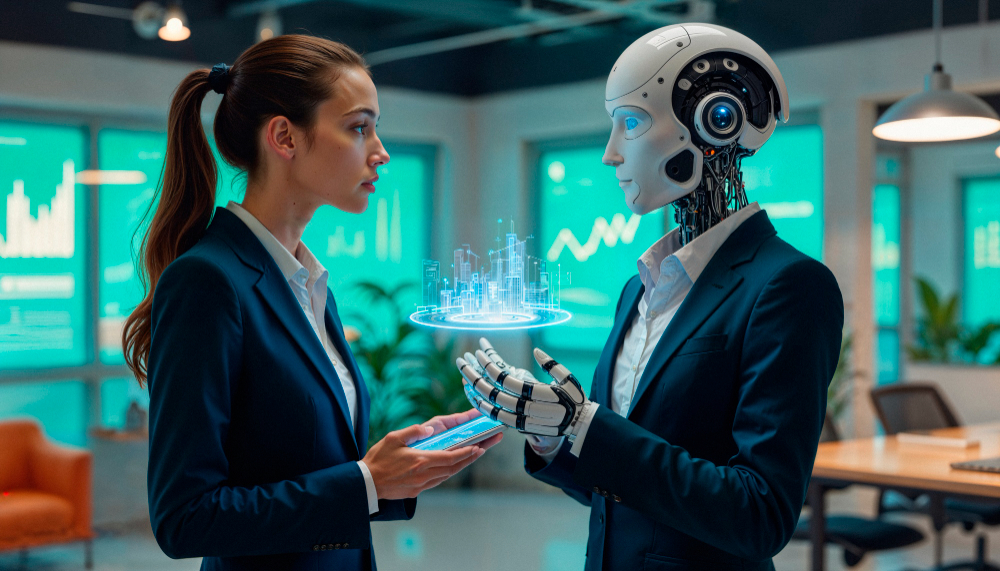
The Future of AI Marketing Is Integrity – Why Restraint Beats Hype in the Long Run Let me start with something personal, and so very common and ordinary these days. Like most people today, I use ChatGPT (+ Claude, Copilot, et al) regularly. At first, it was for drafting and summarizing. Over time, I noticed myself using it differently, not just to generate output, but to validate my thinking. I wasn’t asking it to decide for me, but I also wasn’t interrogating its responses the way I would a colleague. Nothing in the product forced that shift. That’s when an uncomfortable realization settled in – one that many Product Marketing leaders sense but rarely articulate: “Most AI failures don’t start in engineering. They start in marketing.” Not because teams are dishonest, but because language shapes behavior far more powerfully when the product itself feels intelligent. What “marketing AI without lying” actually means When we talk about “lying” in AI marketing, it’s important to be precise. This isn’t about intent or ethics in the moral sense. Most teams fall into trouble because of pressure, competitive noise, investor expectations, or the fear of sounding less advanced than the market. The clearest articulation of this comes from Kim Cooper, who has written extensively about AI washing, particularly through her work with AI in Beta. Her point is simple and unsettling: many AI products are not being misbuilt; they are being misrepresented. AI washing shows up when marketing implies autonomy where there is assistance, judgment where there is pattern recognition, or inevitability where there is probability. It also shows up in metaphors. Terms like copilot, agent, OS, etc quietly transfer authority to the system without acknowledging the consequences. This rarely comes from bad intent. It comes from underestimating how deeply marketing influences cognition. From “not lying” to AI Marketing With Integrity At this point, it’s worth naming the higher bar. Not lying is defensive.Integrity is proactive. AI Marketing With Integrity means accepting a harder responsibility: How you explain an AI system determines how people use it, defer to it, and trust it. In other words, Product Marketing is no longer just about adoption or differentiation. It is about stewardship of expectations, of judgment, and ultimately of trust. This is where PMM (welcome to the fireside, Product Marketing Managers) quietly becomes a governance function. How integrity (or the lack of it) shows up in real products You can see this play out across products many of us know well. With ChatGPT, the breakthrough wasn’t just capability – it was accessibility. Conversational AI removed intimidation and made advanced models usable by anyone. Early disclaimers about fallibility mattered. Where trust later wavered wasn’t because the system became worse, but because the story around it accelerated faster than its boundaries. “Ask it anything” sounds empowering, but it also nudges users toward epistemic deference. Now contrast that with Grammarly. Grammarly has used AI for years, yet it has remained remarkably disciplined in how it frames its role. It never claims authorship. It never claims correctness. It positions itself as assistance, always leaving agency with the user. As a result, trust compounds quietly over time. Or consider tools like Otter.ai and Fireflies.ai. These products are almost aggressively honest. They capture, transcribe, and summarize. They don’t pretend to understand strategy or intent. And because of that restraint, teams rely on them deeply without surrendering judgment. The pattern is consistent: The AI products that earn durable trust are rarely the loudest.They are the most precise. The metaphor problem Product Marketing rarely audits Metaphors deserve special attention because they do more than explain, they instruct behavior. Calling an AI a copilot feels intuitive and friendly. But in aviation, a copilot is a trained human with shared authority and accountability. When we borrow that metaphor for a probabilistic system, we aren’t simplifying, we are reshaping responsibility. As a Product Marketing leader, choosing a metaphor is not a copy decision.It is a design decision with long-term consequences. Metaphors tell users when to think, when to trust, and when to stop questioning. Narrative debt: the cost of hype that shows up later This leads to a concept PMMs should hold onto: Narrative debt is the gap between what marketing implies and what the system can sustainably deliver. Like technical debt, it compounds quietly. You pay for it later through user mistrust, support overload, roadmap distortion, and reputational drag. And the uncomfortable truth is that while product teams usually pay the interest, Product Marketing often took out the loan. Integrity, in this sense, is not restraint for its own sake.It’s risk management for the long term. What integrity actually requires of Product Marketing leaders Marketing AI with integrity doesn’t mean underselling. It means being exact. In practice, that looks like: making boundaries visible at the moment of use, not buried in documentation signaling uncertainty as a strength rather than a weakness resisting metaphors that inflate authority never implying judgment when the product offers assistance optimizing for trust over time, not applause at launch Or more bluntly: if your marketing encourages users to stop thinking, you’ve crossed a line, even if conversion went up. Why restraint wins in the long run AI products don’t just change workflows. They change how people reason. That makes Product Marketing one of the most influential, and under-acknowledged forces shaping the future of human judgment at scale. In this context, restraint isn’t conservative. It’s strategic. As we’ve worked on efforts like FHD OS and FHD CoSaaS, one lesson has been consistent: the hardest problems were never technical. They were explanatory. They lived in how limits were described, how responsibility was framed, and what was deliberately not promised. A final word, and an open invitation If you’re a Product Marketing leader feeling the tension between ambition and honesty, differentiation and restraint, you’re not alone. These are leadership questions now, not messaging tweaks. If you’d like to think through these challenges together, you can write to us at help@founderhelpdesk.in. Because in the future

AI Product Management Lesson #6. The Quiet Return of the Chief of Staff
Why the most human role in modern organizations is being rediscovered. A role that never wanted the spotlight For years, the Chief of Staff role was misunderstood. Sometimes it was seen as ceremonial, sometimes as administrative or at best, seen as a luxury reserved for governments or very large enterprises. And yet, quietly, over the last few years, the role has been rediscovered. Not because organizations are getting bigger. But because they are getting faster, flatter, and more complex. Across founder-led startups, high-growth scale-ups, and even modern enterprises, leaders are reaching for a role that does something no dashboard, OKR system, or AI copilot quite manages to do: Hold judgment together when everything else is fragmenting. Why now? A pattern, not a headline There isn’t one announcement that marks the return of the Chief of Staff. Instead, there’s a pattern. Founders quietly hiring their first Chief of Staff before their first VP CEOs leaning on Chiefs of Staff to manage strategic drift, not calendars Investors encouraging portfolio founders to bring in a CoS earlier than before Executives like Sheryl Sandberg have long spoken about the leverage of a strong Chief of Staff, noting how the role acts as a force multiplier—not by making decisions, but by ensuring the right decisions survive contact with reality. In fast-moving organizations, that function has become critical again. Reframing the role: what a modern Chief of Staff actually is Let’s dismantle the outdated mental model. A modern Chief of Staff is not: a scheduler a meeting wrangler a project tracker A modern Chief of Staff is: The operating system between leadership intent and organizational reality. They sit in the gap between: what the founder or CEO means and what the organization does That gap has widened in the AI era. Execution has accelerated. Context has not. The lived reality of a Chief of Staff (pain points rarely written down) To understand why this role is re-emerging, you have to look at it from the Chief of Staff’s point of view. 1. Context overload Chiefs of Staff see everything: strategy conversations people tensions execution failures half-formed ideas But they often own very little. They hold contradictions without the authority to resolve them. 2. Invisible success When things work: the CEO looks decisive the team looks aligned When things break: the CoS is suddenly “not across it” This asymmetry is structural, not personal. 3. Decision ambiguity Chiefs of Staff are expected to: “know what the CEO wants” anticipate decisions act without explicit authority All while operating in ambiguity. 4. Emotional labor A large part of the role is unspoken: absorbing tension softening messages managing tone preventing escalation This work doesn’t show up in metrics—but it prevents fires. 5. No system support Most CoS work lives: in conversations in instincts in private notes Tools optimize tasks. The CoS optimizes judgment transfer. And almost no software is designed for that. Why the role is returning now (the structural reason) Here’s the deeper reason this role is re-emerging: As AI accelerates execution, the value of human judgment coordination increases. AI tools are excellent at: summarizing drafting automating workflows Tools from companies like Notion, Slack, and Asana have dramatically increased operational speed. More recently, AI-first assistants like Otter.ai and Fireflies.ai have reduced cognitive load around meetings and documentation. These are meaningful improvements. But none of them answer the harder question: “Are we still doing the right things, for the right reasons, in the right order?” That question belongs to the Chief of Staff. From philosophy to practice: introducing FHD CoSaaS This brings us to the natural next step in this FounderHelpDesk Masterclass series. Introducing: FHD CoSaaS – Chief of Staff as a Service Not as outsourcing. Not as automation. And not as a replacement for trusted human partnership. FHD CoSaaS is a human-in-the-loop model: experienced Chiefs of Staff supported by fractional CPOs, CTOs and other CXOs augmented by structured decision hygiene aligned with the same principles behind FHD OS Its purpose is simple, but not easy: To make leadership judgment usable at organizational scale and velocity. What FHD CoSaaS actually focuses on Rather than features, FHD CoSaaS focuses on outcomes: Decision hygienePreserving why decisions were made, not just what was decided. Priority coherenceEnsuring urgency does not override importance. TranslationTurning founder or CEO intent into language teams can execute. Signal detectionSpotting misalignment, overload, and drift early—before they surface as crises. Follow-through without authorityThe hardest CoS skill, supported systematically. And crucially: Every engagement keeps a human in the loop – because judgment cannot be automated. This is the line that separates FHD CoSaaS from purely AI-driven “executive assistant” narratives. A respectful look at the landscape It’s worth acknowledging that parts of this problem are already being addressed to some extent by others. Executive assistant platforms and AI copilots are increasingly capable at task triage and synthesis. Workflow automation tools are improving operational clarity. Founder coaching platforms are helping with reflection and narrative. These are all positive signals. What’s still missing is integration around judgment, especially in fast-moving founder-led contexts. FHD CoSaaS is designed to sit above tools, not replace them. Snapshot of how this Masterclass has evolved At this point, the picture becomes clear: MASTERCLASS 4 explored why judgment cannot be automated at the CEO level MASTERCLASS 5 introduced FHD OS, preserving founder coherence MASTERCLASS 6 operationalizes that coherence through the Chief of Staff The first protects the person. The second protects the system around the person. The third introduces and empowers the hidden human-in-the-loop. Together, these three form a human-centered response to accelerating complexity. Closing: the work that keeps everything else from breaking The Chief of Staff role was never meant to be loud. It exists to make others clearer. To help judgment travel intact through complexity. To ensure that speed doesn’t quietly erode sense-making. In a world racing toward automation, this kind of quiet coordination of human judgment may be the most valuable work left. That

AI PM Masterclass 5: FH DOS – A Founder Operating System For Coherence
1982. New York. Everything collapses. In 1982, Ray Dalio was certain he understood how the world worked. He had strong macroeconomic convictions. He made bold bets. And he was wrong…spectacularly. The result wasn’t just a bad trade. It was bankruptcy. Dalio lost nearly everything. He had to borrow money from his father just to get by. More painful than the financial loss was the realization that his confidence had far outpaced his understanding. What followed wasn’t motivational grit or reinvention theater. It was a quiet, radical insight. Dalio later described the epiphany like this: “If I solve the puzzle – which is, ‘How does reality work, and how would I deal with it better in the future?’ – I will get a gem. That gem is some principle, which I will literally write down.” That sentence is not about finance. It’s about memory. More precisely: decision memory. Dalio realized that the real failure wasn’t just the decision. It was that “future-Ray” had no reliable access to the reasoning of “past-Ray.” Before algorithms … before systems … before scale – he built a way to preserve judgment across time. That move matters more today than it did in 1982. Fast-forward: a world of founders, moving faster than themselves Years later, Naval Ravikant made a simple observation that keeps proving true: “I firmly believe that the efficient size of a company is shrinking very rapidly, and so the future will be almost all startups.” If Naval is right, then the number of founders is exploding. Not CEOs of stable systems.Founders of unstable, fast-moving, identity-shaping ventures. Which means more people are living inside the same structural problem Dalio faced…but without the benefit of time, solitude, or reflection. Founders today: make irreversible decisions with reversible information change roles faster than identity can stabilize are expected to project confidence while privately uncertain move so fast that reasoning evaporates behind them And yet, the tools we give founders assume something quietly false. The hidden assumption baked into founder tools Most modern founder tools assume the founder is already formed. Notion assumes clarity OKRs assume stable intent Dashboards assume emotional neutrality AI copilots assume confidence is real But founders don’t live in clarity. They live in becoming. The real bottleneck is not productivity. It’s coherence. And coherence is not something you optimize with more execution software. Introducing FHD OS – A Founder Operating System for Coherence Let’s give this idea a working name: FHD OS – a Founder Operating System for Coherence. Not as a product announcement. Not as a finished system. But as a design stance. FHD OS is not software for execution. It is software for continuity of self. Its job is not to tell founders what to do. Its job is to help founders remain coherent while they evolve faster than the companies they are building. This is a fundamentally different class of system. Why founders break (and why tools don’t see it) A founder is not a single role. They are many, simultaneously: decision-maker storyteller recruiter seller leader symbol human being with doubt Most founder failures are not strategic errors. They are identity collisions: the builder vs the manager the optimist vs the realist the private thinker vs the public narrator No existing tool is designed to hold these tensions. They optimize output.Founders need containment. What FHD OS actually supports FHD OS doesn’t invent new founder behavior. It productizes what the best founders already do manually…journals, voice notes, reflection…while adding structure, memory, and continuity. At its core, FHD OS is built on a small set of primitives: 1. Decision Memory Capturing why decisions were made…assumptions, fears, context…before hindsight rewrites history. This is exactly what Dalio systematized after 1982. Before automation, he externalized memory. 2. Doubt Containment A private, non-judgmental space where uncertainty can exist without demanding action or performance. Founders don’t lack doubt. They lack a safe place to put it. 3. Narrative Coherence Helping founders maintain an internal story before telling an external one…to teams, investors, customers, or the public. 4. Regret Surface Early signals when decisions feel misaligned…not after damage is done. This is not analytics.It’s emotional signal detection. 5. Identity Transitions Supporting the shift from founder → leader → symbol without fragmentation. These are not features.They are cognitive safeguards. Why AI must assist, not decide In the current AI moment, it’s tempting to think the solution is smarter advice. It isn’t. FHD OS must never tell a founder what to do. That would collapse uncertainty prematurely, the very thing founders must learn to live with. AI’s role here is quieter and more powerful: preserve memory surface patterns reflect contradictions slow down false certainty Dalio didn’t automate judgment first.He preserved it. FHD OS follows the same flow…just earlier, and at scale. A believable starting point: Decision Memory as v1 You don’t build an OS all at once. You start with the sharpest, most universal pain. FHD OS v1: Decision Memory voice-first capture after major decisions structured reasoning and assumptions time-delayed reflection prompts pattern detection across months If this were the only thing the system ever did, it would already be valuable. Because it protects founders from the most dangerous bias of all: Forgetting who you were when the decision actually made sense. Why now This is not a new problem. But it is newly addressable. founders already externalize thinking to AI speed and loneliness are increasing human support systems don’t scale AI is now cheap enough to listen continuously What’s missing is not intelligence. It’s taste, restraint, and respect for human becoming. Why FHD OS matters beyond founders Strip away the startup context, and something deeper appears. FHD OS is really about this: How do we design systems that help humans remain coherent while they change faster than they can process? Founders feel it first.They won’t be the last. Closing: an open invitation Ray Dalio didn’t survive 1982 by becoming smarter. He survived by ensuring his future self could remember. Founders today are